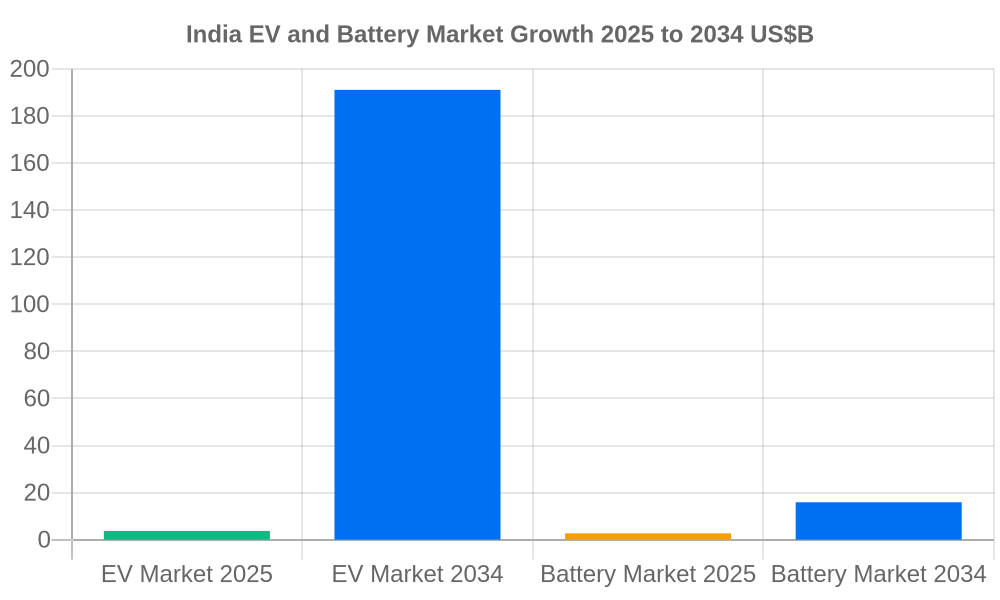
A green field QAD Adaptive ERP implementation can take an EV component plant from a bare site to day-one paperless operations in about four months, but only when four work-streams run as one program rather than four sequential projects: adopting the out-of-the-box Automotive Suppliers core model, digitising the shop floor with barcode and PLC automation, wiring corporate-ERP integration through Boomi, and locking India regulatory configuration into the core model from the first phase. This guide is part of our QAD green field implementation series; a companion piece treats the post-stabilisation cloud migration pathway, so this one stays on the launch itself, the how rather than the what-next. It is written for operations directors, IT leaders, and ERP program owners at EV component and battery manufacturers in India who are commissioning a new plant on QAD and need it live, compliant, and paperless inside the window plant construction allows. The urgency is real: India's EV market was valued at US$ 3.71 billion in 2025 and is projected to reach US$ 191.04 billion by 2034, a CAGR of 54.94% for the 2025 to 2034 period, per IBEF (2025), and the suppliers riding that curve have to stand up an automotive ERP in months, not years.
What You'll Learn
Why the out-of-the-box Automotive Suppliers core model, not customisation, is what makes a four-month green field go-live possible
How to choose between a green field and brownfield QAD path, and the India regulatory configuration each requires at cutover
How Digitus actually sequenced a record-breaking four-month EV component go-live, with the OOTB Automotive Suppliers core model, Boomi master-data integration, and QAD Automation Solutions with PLC running as parallel work-streams
How MMOG/LE Version 6 compliance, shop-floor digitisation, and corporate-ERP integration get engineered in from day one rather than retrofitted
Why is QAD Adaptive ERP the right fit for a green field EV plant?
The strongest argument for QAD at a new EV plant is the one that surfaced in our own delivery: a green field site has no legacy data, no migrated custom code, and no inherited process variation, so an out-of-the-box automotive core model can be adopted whole instead of rebuilt. In our Digitalized Operations from Day 1 engagement for an EV component manufacturer in India, following the QAD OOTB Core Model for Automotive Suppliers is what let the plant adapt quickly to industry best practices and become directly ready for certification and compliance, and it is a large part of why the implementation closed in four months rather than the year-plus a customised build consumes.
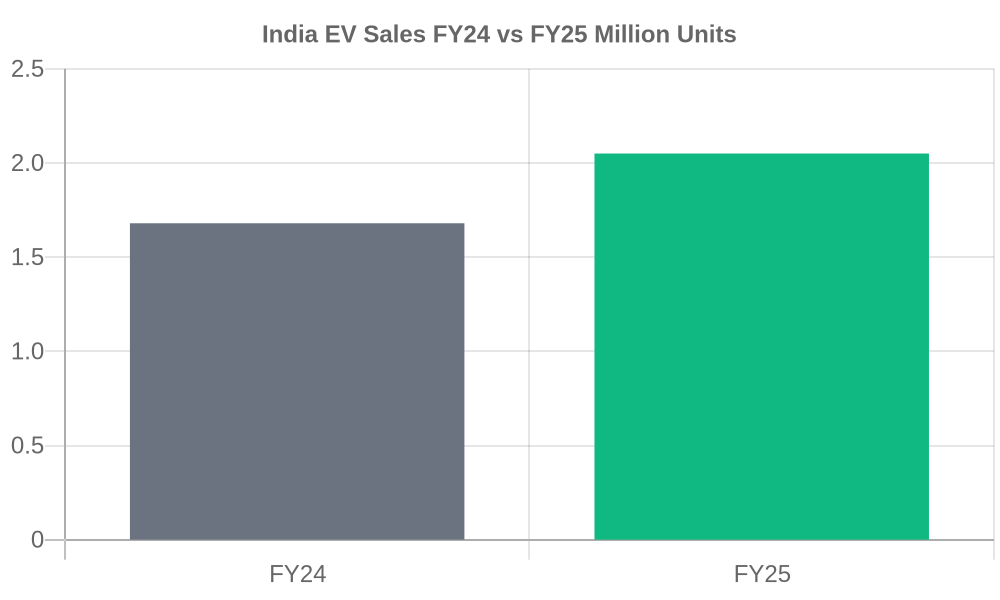
The market makes the timing unforgiving. IBEF reports India's EV battery market expanding from US$ 2.71 billion in 2025 to US$ 15.90 billion by 2034 at a CAGR of 21.70%, and FY25 EV sales reaching 2.05 million units, up from 1.68 million in FY24 (IBEF, 2025). New entrants chasing that demand need an ERP that handles automotive demand call-offs, long-term customer forecasts, and JIT shipment schedules out of the box. QAD's OOTB Material Planning carries those without bespoke development, which matters when the plant has to be go-to-market ready before the curve moves past it.
QAD's automotive credibility rests on what it embeds rather than what it markets. The platform supports JIT and JIS sequencing for OEM delivery and high-velocity demand call-offs over EDI, and it carries native MMOG/LE coverage that mid-market alternatives treat as an add-on. The practical consequence for a new supplier is the gap between qualifying for OEM supplier programs at launch and spending months after go-live chasing the compliance baseline that should have come with the platform. QAD customer case studies document productivity improvements of up to 26% within the first 90 days of implementation, per top10erp.org (2026).
What is the difference between a green field and brownfield QAD implementation?
The decision turns on one fact most new EV ventures already know about themselves: the core model that runs their established business lines is rarely adaptable to automotive, which is the exact condition that makes green field correct. A green field QAD implementation deploys a fresh QAD Adaptive ERP instance at a new plant with nothing to migrate from, so MMOG/LE-ready process maps can be adopted as-is at cutover. A brownfield implementation migrates or upgrades an existing QAD estate, typically legacy QAD SE or EE on-premise instances moving to Adaptive ERP on QAD Cloud, and carries data, custom code, and process history that have to be unwound before they can be standardised.
Brownfield earns its place when a manufacturer already runs QAD at scale. Our QAD cloud migration case study covers migrating multi-version on-premise QAD, a mix of QAD EE and QAD SE instances, across continents to QAD Adaptive ERP on Cloud, with EDI trading-partner continuity and a global core model standardised with minor site-specific tweaks. Those are data-migration cycles and trading-partner cutovers a green field plant never faces. The trade is straightforward: brownfield preserves history and supplier relationships, green field trades that history for speed and a clean compliance baseline.
For a new EV business line, the choice usually resolves to green field, and the real work is then answering four questions before the implementation begins. Is there an existing QAD footprint worth extending? How much historical data genuinely has to carry forward? How fast must the plant be go-to-market ready against its construction schedule? And what India regulatory configuration, GST, e-invoicing through the IRP, and TDS, has to be live at cutover rather than added later? Digitus delivers both paths through its QAD ERP implementation services, covering core model design and roll-outs for green field and brownfield, module consulting, database administration, and operational support.
Dimension
Green Field
Brownfield
Starting point
New plant, no existing ERP
Established QAD SE or EE footprint
Data migration
Master data and opening balances only
Technical uplift plus export and import per legacy version
Customisation risk
Low, adopt the OOTB core model
Higher, legacy custom code may carry forward
MMOG/LE at go-live
Achievable at cutover
Depends on legacy process redesign
EDI
Fresh trading-partner setup
Migrate existing trading partners
Pacing driver
Plant commissioning schedule
Multi-BU migration sequencing
India regulatory config
Built into the core model from the start
Re-validated during migration
How do you design the QAD core model for an automotive supplier?
Core model design is the most consequential decision in the entire program, and the rule that governs it is customisation minimisation: adopt the OOTB process maps, do not rebuild them. QAD Adaptive ERP ships a core model for Automotive Suppliers built around Order-to-Cash, Procure-to-Pay, and Plan-to-Produce flows, and in our EV component delivery, adopting those maps rather than reverse-engineering the parent company's processes is precisely what kept the timeline at four months. The instinct to customise is the single biggest threat to a green field schedule, because every deviation from the standard model has to be specified, built, tested, and then maintained through every future QAD release.
The automotive core model carries the capabilities an EV supplier needs on day one without bespoke work. Long-term customer forecasts and shipment schedules run through QAD OOTB Material Planning. Demand call-offs arrive over EDI. Serial and lot tracking provide the component-level traceability that battery and cell suppliers increasingly have to prove. MMOG/LE compliance is woven into the process maps rather than configured as a later project. Good core model design means aligning to the automotive-supplier standard the OEM customers already expect, and treating any proposed customisation as something that must justify its lifetime maintenance cost before it enters scope.
India regulatory configuration belongs in core-model design from the start, not in UAT where it surfaces as late rework. GST treatment, e-invoicing through the IRP, TDS, and statutory reporting have to be modelled alongside the automotive process flows so the plant is statutorily compliant the day it goes live. This is where local delivery experience pays for itself: any Indian QAD green field that puts these configurations on the core-model checklist from the start has them designed in rather than discovered, which is the working principle behind Digitus's QAD ERP implementation services. The difference is a cutover that clears the first statutory filing cleanly and one that scrambles to.
How did Digitus sequence a four-month green field go-live?
The four-month timeline was a different shape of program rather than a compressed standard plan: the integration and shop-floor work-streams ran in parallel with QAD configuration rather than as follow-on projects after it. The conventional sequence configures the ERP, goes live, then adds middleware and shop-floor automation as separate work. The Digitalized Operations from Day 1 engagement collapsed that calendar by treating four streams as one program with a single go-live date, named in the table below. Day-one paperless operations came from all four landing together at cutover, not from a phased rollout.
The decisive design choice was the rule against customisation. Following the OOTB process maps for Automotive Suppliers, as the case study documents, is what let the plant adapt quickly to industry best practices and become directly compliant for certifications and compliance. Each work-stream was tuned within the OOTB model rather than redesigned: Automation Solutions configured for barcode-based inventory transactions, the Adaptive UI configured with simplified screens, the Analytics dashboard enhanced with reports for senior management, and the Boomi connector to Oracle EBS sitting on the platform's documented integration pattern. That discipline kept the parallel streams from collapsing into a re-build under timeline pressure.
QAD's own Champion Pace methodology corroborates that this pacing is achievable rather than reckless, in QAD's own engagements. The documented 12-week Champion Pace plan runs discovery in Weeks 1 to 2, configuration in Weeks 3 to 4, a first data-migration cycle in Weeks 5 to 6, a conference room pilot in Week 7, a second migration cycle and UAT in Weeks 8 to 9, cutover rehearsal in Week 10, go-live in Week 11, and hypercare in Week 12, per QAD (2026). Champion Pace gets to a fast single-stream go-live by leaning on AI-assisted deployment and preconfigured templates. The Digitus delivery applied the same OOTB-first principle to a four-stream program rather than a single ERP track, which is the way the calendar held at four months for a fully digitised, integrated, paperless go-live rather than a clean ERP-only one.
Parallel work-stream
What it delivered
Source-confirmed outcome
QAD OOTB Core Model for Automotive Suppliers
O2C, P2P, and PL2P process maps adopted as-is in QAD AERP 2023
"Directly compliant for certifications and compliance" via core-model alignment
QAD Automation Solutions (barcode)
Barcode-based material movements and tracking across logistics functions
"Speed, efficiency and accuracy" in day-to-day inventory transactions
PLC integration
Production reporting direct from work centres and machines
Paperless production reporting at cutover
Boomi to Oracle EBS
Master-data sync from Oracle EBS to QAD AERP 2023; transactional reverse-sync from QAD back to Oracle EBS
Group consolidation aligned with operational data from day one
How does a Production Execution System digitise the shop floor?
Paperless from day one is a shop-floor claim before it is an ERP claim, and it is earned by a production execution layer that captures movement and machine data at source rather than keying it in afterward. Digitus's Production Execution System (PES) is a purpose-built application, integrated with QAD, that splits work orders into job orders, schedules them across production lines and shifts through a schedule workbench, links product-level quality-assurance attributes against each job-order operation, and surfaces equipment efficiency across the plant by shift and line through a Shop Floor viewer. It is the layer that turns ERP transactions into real-time production control.
In the EV component engagement, the shop-floor stream was delivered through QAD Automation Solutions for barcode-based material movements across logistics, combined with automation of production reporting directly from work centres and machines through PLC integration. Those two mechanisms are what make day-one paperless real rather than aspirational: barcode scanning replaces paper move tickets across receiving, stores, and dispatch, and PLC integration pushes machine data straight into production reporting instead of a supervisor transcribing counts at end of shift. The data is captured once, at the point and moment it is created, which is the only way a plant runs paperless on its first day rather than after a stabilisation project. For a green field EV plant, a paperless factory floor is a competitive advantage rather than a future-state nicety, and the only way to have it on day one is to capture data at source from the first shift.
The same shop-floor layer is where battery traceability is built rather than bolted on. SAE International's J3327 standard establishes an industry framework for tracking EV battery critical minerals from extraction through manufacturing and end of life, which moves end-to-end genealogy from good practice toward an export-market expectation. QAD serial and lot tracking combined with PES barcode capture creates an audit trail from raw-material receipt to finished assembly, so an Indian EV supplier can answer a traceability request without a manual reconstruction. The deeper point for a green field plant is sequencing: when PES, barcode, and PLC are part of the go-live program rather than a year-two initiative, traceability is a property of the system from the first part produced.
How does Boomi integrate QAD with a corporate ERP at go-live?
A new EV plant is almost always a subsidiary of a larger group, and that group's finance and consolidation usually already runs on Oracle EBS, which makes integration a go-live requirement and not a follow-on project. Digitus uses Boomi as the middleware platform to synchronise data between QAD and Oracle ERP: master data flows from Oracle EBS into QAD Adaptive ERP 2023, and transactional data reverse-syncs from QAD back to Oracle EBS. As the Digitalized Operations from Day 1 case study documents, this lets the plant draw on QAD's manufacturing strength while the group keeps Oracle EBS for finance and consolidation, with both QAD and Boomi hosted on QAD Cloud for availability and security.
The architecture rests on a supported, first-party mechanism rather than custom plumbing. Boomi provides a native Oracle E-Business Suite V2 connector supporting REST_Query, REST_Execute, PLSQL_Execute, and PLSQL_Query operations, connecting to Oracle EBS through the Oracle Integration Repository or a direct Oracle JDBC driver, per Boomi documentation (2026). That connector is the foundation behind the QAD to Oracle EBS master-data sync in our green field delivery, which means the integration sits on documented operations rather than brittle point-to-point code that breaks at the first Oracle patch.
What distinguishes the delivery is sequencing. The Boomi integration ran as a parallel track alongside QAD module configuration, so master-data domains, items, suppliers, customers, and chart of accounts, flowed from Oracle EBS into QAD while transactional outputs flowed back to keep corporate consolidation accurate, all by cutover. Running an automotive QAD practice and a Boomi integration practice deeply enough to land master-data sync at go-live is the joint capability that separates this from a phased approach, and our integration practice also covers Boomi CI/CD pipeline discipline in a dedicated companion article.
How do you make MMOG/LE compliance real at cutover?
Compliance at go-live, rather than months after it, is the clearest commercial reason to run a green field on the OOTB core model, because it decides whether a new supplier can bid for OEM business at launch. QAD Adaptive ERP includes the mapping of all 176 MMOG/LE criteria, which directs suppliers on the steps required in QAD Adaptive ERP to become fully compliant, per QAD (2026). QAD embeds the business process maps, work instructions, and compliance points associated with MMOG/LE directly in the platform and updates them when the standard changes, so a supplier is not re-engineering compliance at every revision. The current standard is MMOG/LE Version 6, released jointly by AIAG and Odette International, which makes citing the current edition straightforward rather than a moving target.
The green field path and the OOTB core model compound here, and that is the part most generic ERP guidance misses. Because Digitus implements the OOTB Automotive Suppliers core model rather than a custom configuration, MMOG/LE readiness is a property of the process maps the plant adopts at cutover, which the case study describes as making the operation directly compliant for certifications and compliance. A custom build, by contrast, has to reproduce each compliance control by hand and then defend it at audit. For a new entrant, native readiness is the difference between qualifying for OEM supplier programs at launch and running a separate compliance project after go-live that delays first revenue.
The way to make this concrete is to look at what each green field work-stream actually delivered against compliance at cutover, rather than comparing platforms in the abstract. The table below maps the four parallel work-streams from the Digitalized Operations from Day 1 engagement to the cutover outcome each produced, plus the India regulatory layer any Indian QAD green field implementation has to model into the core in parallel for the plant to be statutorily compliant on day one.
Green field work-stream
What it delivered at cutover
Compliance and operations effect
OOTB Automotive Suppliers core model
O2C, P2P, and PL2P process maps adopted as-is
MMOG/LE process controls live without custom build
QAD Automation Solutions plus PLC
Barcode material movements and machine-sourced production reporting
Paperless logistics and accurate, real-time inventory and output records
Boomi to Oracle EBS
Master-data sync in, transactional sync back
Group consolidation accurate from day one, no manual reconciliation
India regulatory configuration
GST, e-invoicing via IRP, TDS modelled in the core
Statutory compliance at the first filing, not retrofitted
The 176 criteria span materials planning, supplier scheduling, EDI and demand call-offs, packaging and labelling, and delivery-performance measurement, and QAD covers each inside the core ERP. That native coverage is why an OOTB green field build presents a coherent compliance position at cutover rather than a patchwork of add-ons assembled afterward.
What should you do after go-live to sustain and scale operations?
Go-live is a milestone, not the finish line, and the weeks immediately after it decide whether the implementation consolidates into durable operations or starts accumulating quiet issues. The discipline is structured hypercare followed by proactive monitoring. Champion Pace itself builds a hypercare week into its plan and then transitions explicitly to a Phase 2, a useful reminder that the program continues past cutover. In our own delivery, hypercare is where the day-one paperless model is protected against the edge cases that always surface in the first weeks of live operation, before workarounds have a chance to harden into habit. A disciplined hypercare window, with a clear triage and resolution path for the issues a real production environment exposes, is what converts a clean cutover into durable operations.
Sustaining operations means turning the analytics layer into a management instrument rather than a reporting afterthought. In the EV component engagement, the QAD Analytics dashboard was enhanced with additional dashboards and reports for senior-management visibility, and the QAD Adaptive UI was configured with simplified screens so end users adopt the system instead of building workarounds around it. Proactive application health monitoring, proactive process monitoring, and minor enhancements, all part of Digitus's QAD operational-support scope, are what keep the plant running and protect the day-one paperless model from eroding back toward paper as edge cases appear.
The natural next step on the platform roadmap is where green field and cloud migration meet. A plant that launches QAD on-premise or in a hybrid posture frequently moves to a full QAD Cloud footprint once operations stabilise. Our QAD cloud migration case study documents migrating multi-version on-premise QAD across business units and countries to QAD Adaptive ERP on Cloud, with EDI trading-partner continuity and global core model standardisation. The strategic value is single-partner continuity: the partner that delivers the launch can take a multi-plant estate to the cloud without a re-implementation, the pathway our companion cloud migration coverage treats in full.
Ready to launch your EV plant on QAD Adaptive ERP?
Digitus is a QAD Adaptive ERP partner that delivered a record-breaking four-month green field implementation for an EV component manufacturer in India: QAD AERP 2023 on the OOTB Automotive Suppliers core model, PES with barcode and PLC automation, MMOG/LE readiness at cutover, and Boomi integration to corporate Oracle EBS, all live on day one. Read the Digitalized Operations from Day 1 case study to see exactly how it was built, or explore our QAD ERP implementation services to plan a green field plant of your own.
AIAG and Odette International (2023). "Global MMOG/LE Version 6, Introduction and Instructions." odette.org/mmog
Frequently asked questions
What is a QAD green field EV manufacturing implementation?
A QAD green field EV manufacturing implementation is the deployment of a fresh QAD Adaptive ERP instance at a brand-new EV component or battery plant that has no prior ERP system. It typically adopts QAD's OOTB Automotive Suppliers core model covering Order-to-Cash, Procure-to-Pay, and Plan-to-Produce, with MMOG/LE compliance, barcode and PLC shop-floor automation, and corporate-ERP integration engineered in from day one. Digitus delivered one such implementation for an EV component manufacturer in India in a record-breaking four months, with a clean compliance baseline at cutover.
How long does a green field QAD implementation take for an EV plant?
A focused single-site green field QAD implementation can go live in roughly four months, as Digitus demonstrated for an EV component manufacturer in India, against a general QAD deployment range of three to twelve months depending on scope and customisation, per ERP Research (2026). The compression comes from adopting the OOTB Automotive Suppliers core model rather than customising, and from running integration and shop-floor digitisation as parallel tracks instead of follow-on projects. QAD's own Champion Pace methodology documents a 12-week single-stream go-live plan, which corroborates that this pacing is achievable rather than aggressive.
What is MMOG/LE compliance and why does it matter for EV suppliers?
MMOG/LE, the Materials Management Operations Guideline and Logistics Evaluation, is the automotive industry's supplier self-assessment standard, currently at Version 6 from AIAG and Odette International, covering materials planning, supplier scheduling, EDI, packaging, and delivery performance. QAD Adaptive ERP includes the mapping of all 176 MMOG/LE criteria and updates them when the standard changes, per QAD. Because the compliance process maps are embedded in the platform, a green field implementation on the OOTB core model is compliance-ready at cutover, which qualifies a new supplier for OEM programs at launch rather than months later.
Should an EV component manufacturer choose a green field or brownfield QAD path?
A new EV business line should usually choose green field, because the core model that runs an established business is rarely adaptable to automotive requirements, and a clean start allows MMOG/LE-ready process maps to be adopted at cutover. Brownfield is the right path when a manufacturer already runs QAD across multiple business units and needs to preserve history and trading-partner relationships through a migration to QAD Cloud. The decision rests on four questions: existing QAD footprint, historical data that must carry forward, go-to-market urgency, and the India regulatory configuration required at cutover.
How does Boomi connect QAD to a corporate Oracle EBS system?
Boomi acts as the middleware platform that synchronises data between QAD Adaptive ERP and a corporate Oracle E-Business Suite system, using a native Oracle EBS V2 connector that supports REST_Query, REST_Execute, PLSQL_Execute, and PLSQL_Query operations, per Boomi documentation. In a Digitus green field implementation, master data flows from Oracle EBS into QAD AERP 2023 while transactional data reverse-syncs from QAD back to Oracle EBS, keeping group consolidation accurate. Both QAD and Boomi are hosted on QAD Cloud, and the integration runs as a parallel track inside the go-live timeline rather than as a follow-on project.
Why does running implementation work-streams in parallel shorten a green field go-live?
Parallelism shortens the calendar because the long poles of a green field program, ERP configuration, integration, and shop-floor digitisation, do not have to wait for each other when they build against one agreed master-data design. The conventional approach configures and goes live first, then adds middleware and automation as separate projects, which stretches the timeline across multiple cutovers. Digitus instead agrees the master-data design up front and runs the Boomi to Oracle EBS integration, QAD Automation Solutions for barcode, and PLC integration concurrently with QAD module configuration, which is what pulls a fully digitised, integrated go-live toward four months.
What India-specific regulatory configuration must be live at QAD go-live?
An Indian EV plant must have GST treatment, e-invoicing through the Invoice Registration Portal (IRP), TDS, and statutory reporting configured and live at cutover, not added afterward. The reliable way to achieve this is to put the regulatory layer on the core model checklist from the start, so it is modelled alongside the automotive process flows rather than discovered during UAT. Leaving statutory configuration late is one of the most common causes of green field go-live slippage in Indian manufacturing, and local delivery experience is what keeps it on the design agenda from the start.
What are the most common mistakes in QAD green field implementations?
The most common mistake is over-customising instead of adopting the OOTB Automotive Suppliers core model, which inflates the timeline and creates upgrade debt that recurs at every QAD release. A second is treating MMOG/LE compliance, integration, and shop-floor digitisation as separate post-go-live projects rather than parallel tracks inside the go-live program. A third is deferring India regulatory configuration to UAT, where it surfaces as late rework that threatens the cutover date.